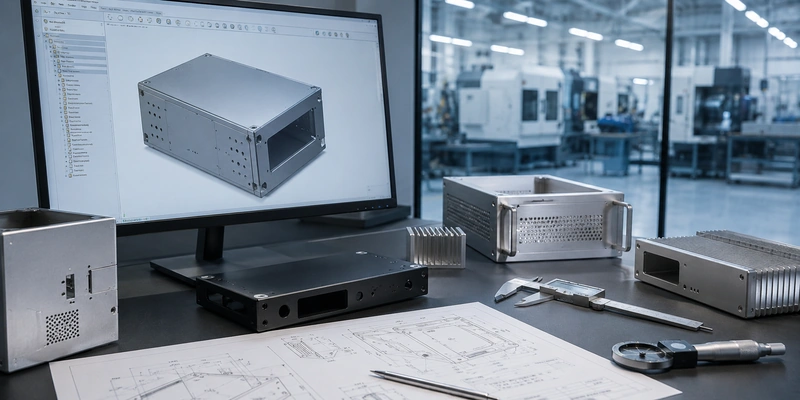
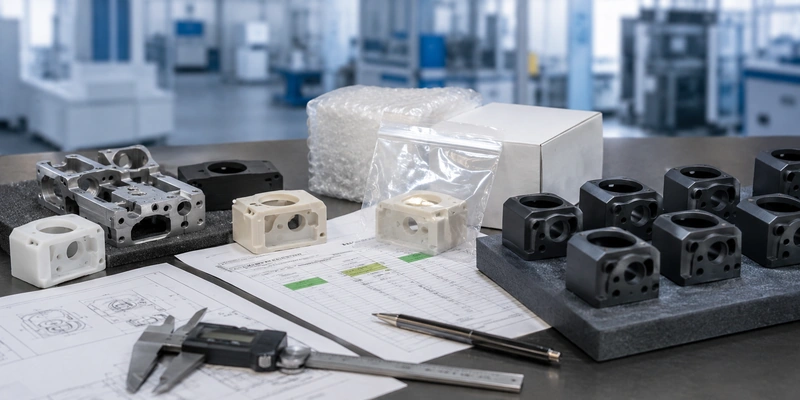
Many industrial products are no longer purely mechanical or purely electronic. A finished product may include metal structures, electronic components, product enclosures, wire harnesses, functional modules, packaging, and final assembly requirements.
When these elements are developed separately, small mismatches can create major issues during assembly or production. A product enclosure may not match the PCBA layout. Mounting holes may not align with internal components. Cable routing may interfere with assembly. Heat dissipation may be considered too late.
This is why coordination between metal parts manufacturing and electronics manufacturing is important for many product development and custom manufacturing projects.
Modern Products Often Combine Mechanical and Electronic Parts
Industrial and commercial products often combine several manufacturing areas. A product may require CNC machined parts, sheet metal fabrication, aluminum profiles, die-cast parts, PCBs, PCBAs, wire harnesses, structural components, enclosure manufacturing, and box-build assembly.
Each part may look simple when reviewed separately. However, the final product depends on how these parts fit and work together.
For example, a metal housing may need to support electronic components, protect internal modules, allow heat dissipation, provide installation points, and meet appearance requirements. At the same time, electronic parts may influence the enclosure size, connector location, cable routing, grounding, shielding, and test method.
If these requirements are not reviewed together, the product may need repeated changes later.
Common Problems When Metal and Electronics Are Developed Separately
Enclosure and PCBA Fit Issues
One common issue is poor fit between the enclosure and internal electronics. The PCBA may be too close to the enclosure wall, mounting holes may not align, or connector positions may not match the opening design.
These problems can delay sampling and increase modification work. In some cases, both the mechanical design and electronic layout may need to be adjusted.
Early coordination helps review the enclosure, PCBA, mounting points, connector locations, and internal clearance before production begins.
Thermal and Ventilation Challenges
Heat dissipation is another important consideration. Electronic components may generate heat, while the enclosure material and structure influence thermal performance.
Ventilation holes, heat sinks, aluminum structures, internal spacing, and surface treatment may all affect product performance. If thermal requirements are reviewed too late, the project may require changes to the enclosure, material, component layout, or assembly method.
Cable Routing and Assembly Conflicts
Wire harnesses, connectors, fasteners, labels, and internal modules must be considered during product assembly. If cable routing is not planned early, it may interfere with screw locking, component placement, testing, or maintenance access.
Assembly sequence also matters. A product that can be assembled once by hand may still be difficult to assemble repeatedly in low-volume or batch production.
Why Early Coordination Improves Manufacturing Readiness
Better Process Selection
Different product requirements may require different manufacturing processes. Metal parts may be produced through CNC machining, sheet metal fabrication, aluminum extrusion, die casting, tooling, or surface finishing. Electronics may involve PCB manufacturing, PCBA assembly, wire harness processing, functional testing, or box-build assembly.
Early coordination helps review which process or combination of processes is suitable for the product structure, quantity, application, appearance, and cost target.
Lower Assembly Risk
Assembly risk increases when mechanical and electronic parts are reviewed separately. Even small mismatches can affect product fit, function, inspection, packaging, and delivery.
By reviewing metal parts, electronics, wire harnesses, fasteners, and enclosure details together, potential issues can be identified before production moves forward.
Clearer Project Communication
Integrated projects often involve several teams. Customers may need to communicate with mechanical engineers, electronics engineers, purchasing teams, quality teams, and production teams.
A coordinated manufacturing approach helps reduce repeated communication and keeps the project requirements clearer. It allows the team to review the product as a complete system, rather than a collection of unrelated parts.
Product Enclosures Are More Than Protective Shells
A product enclosure does more than protect internal components. It may influence heat dissipation, assembly sequence, connector access, waterproofing, electromagnetic compatibility, surface treatment, packaging, installation, and maintenance.
For this reason, enclosure design should be reviewed together with electronic components and final assembly requirements.
A good enclosure design supports both product function and manufacturing efficiency. It should consider not only how the product looks, but also how it will be produced, assembled, inspected, packed, and used.
How Tongyong Industries Supports Integrated Manufacturing Projects
Tongyong Industries provides global B2B custom manufacturing support across metal parts, electronics manufacturing, product enclosures, structural components, wire harnesses, and box-build assembly.
For integrated projects, we focus on engineering communication, manufacturability review, process discussion, quality control, and production coordination. Our goal is to help customers connect mechanical, electronic, and assembly requirements before avoidable production issues occur.
We support projects involving product enclosures, structural components, electronic modules, wire harnesses, functional assembly, and packaging coordination. This helps customers move from product development to manufacturing with clearer project information and better process alignment.
Information to Prepare for an Integrated Project
For projects that combine metal parts and electronics, customers are encouraged to prepare both mechanical and electronic information at the early stage.
Useful information may include mechanical drawings, PCBA requirements, enclosure concepts, wire harness requirements, assembly expectations, target quantity, application background, surface finish requirements, functional testing needs, and packaging expectations.
The more clearly the product requirements are shared, the easier it is to review project feasibility, identify potential conflicts, and support a smoother manufacturing process.