Tesla’s “Flying” Roadster Is Real — But Is It a Breakthrough or Just a Spectacle?
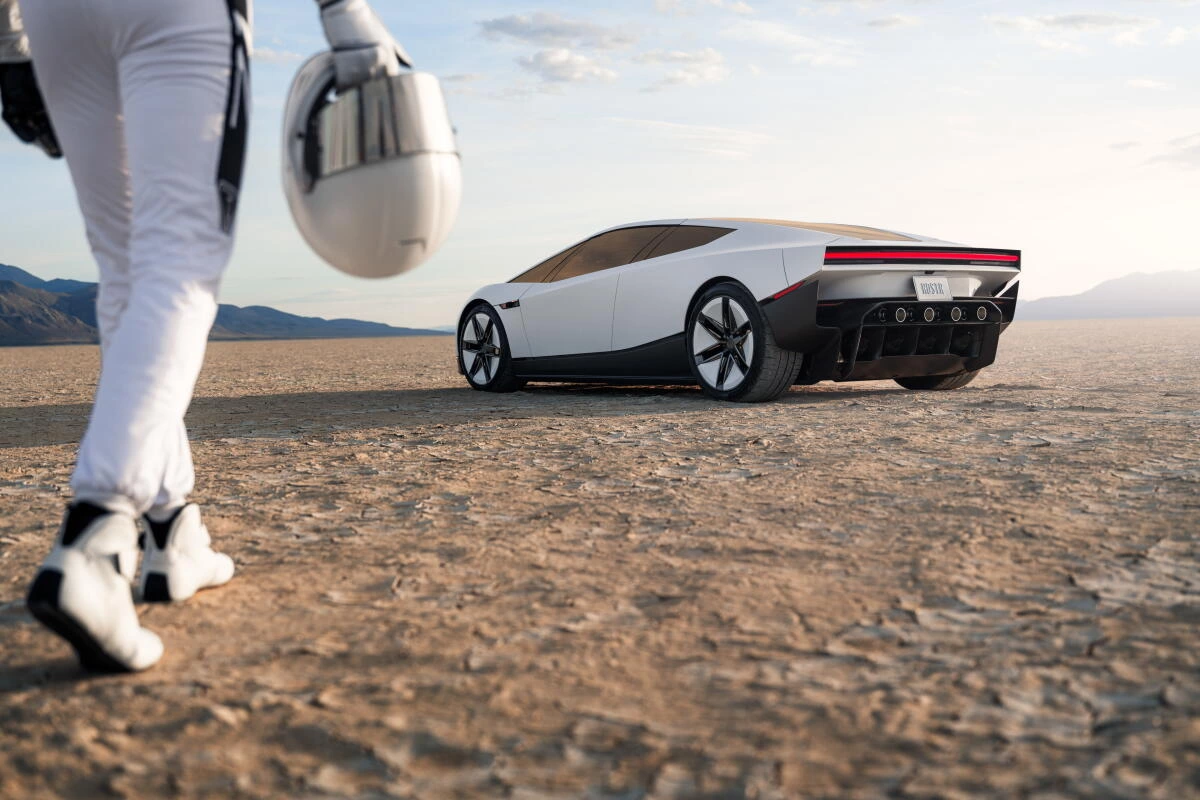
Tesla has finally revealed the long-awaited next-generation Roadster, and it did far more than simply accelerate in a straight line. During the demonstration, the vehicle used a combination of a multi-mode suction system and cold-gas thrusters to perform movements that looked closer to aerospace engineering than conventional automotive design.
The demonstration immediately attracted global attention. Tesla describes the Rocket version as capable of upward acceleration and rotational movement, even stating that “it can fly.” However, the company also makes an important distinction: this version is not approved for public-road use.
[Insert Image 1 Here: Official or realistic Tesla Roadster image]
The next-generation Tesla Roadster combines electric performance with aerospace-inspired technology.
More Than an Electric Sports Car
The new Roadster is designed around technologies rarely associated with a passenger vehicle.
Tesla says its cold-gas thrusters are positioned around the vehicle to provide forward thrust, upward movement and rotational control. A multi-mode suction system can also generate downforce even when the vehicle is stationary.
Together, these systems could allow the Roadster to accelerate from 0 to 60 mph in under one second, improve cornering performance and perform short airborne movements.
This is not conventional flight in the same sense as an aircraft or an eVTOL. It is better understood as a high-performance vehicle using controlled thrust to briefly leave the ground and adjust its movement in the air.
An Engineering Achievement — With Serious Questions
From an engineering perspective, integrating a propulsion system into an electric sports car is genuinely impressive. It requires precise coordination between mechanical structures, electronic controls, pressure systems, sensors, actuators and vehicle software.
However, an impressive demonstration is not the same as a production-ready vehicle.
Tesla still needs to answer several important questions:
-
How long can the vehicle remain airborne?
-
How will the thruster system perform after repeated use?
-
What safety systems will protect the driver and surrounding vehicles?
-
How much maintenance will the pressure and suction systems require?
-
Where could such a vehicle legally be operated?
The Roadster may prove that a car can leave the ground, but it has not yet proved that a flying car can become practical transportation.
Breakthrough Technology or Carefully Designed Publicity?
This is where the Roadster becomes controversial.
Supporters see it as an engineering milestone that brings automotive and aerospace technologies together. Even if the system is not practical today, the research could influence future developments in braking, traction, stability control and high-performance electric vehicles.
Critics see something different: a dramatic demonstration designed to attract attention to a vehicle that has already experienced years of delays.
The Roadster was first presented in 2017, but mass production has still not begun. Current reporting indicates that production is being targeted for 2028, meaning buyers and industry observers may still face another long wait.
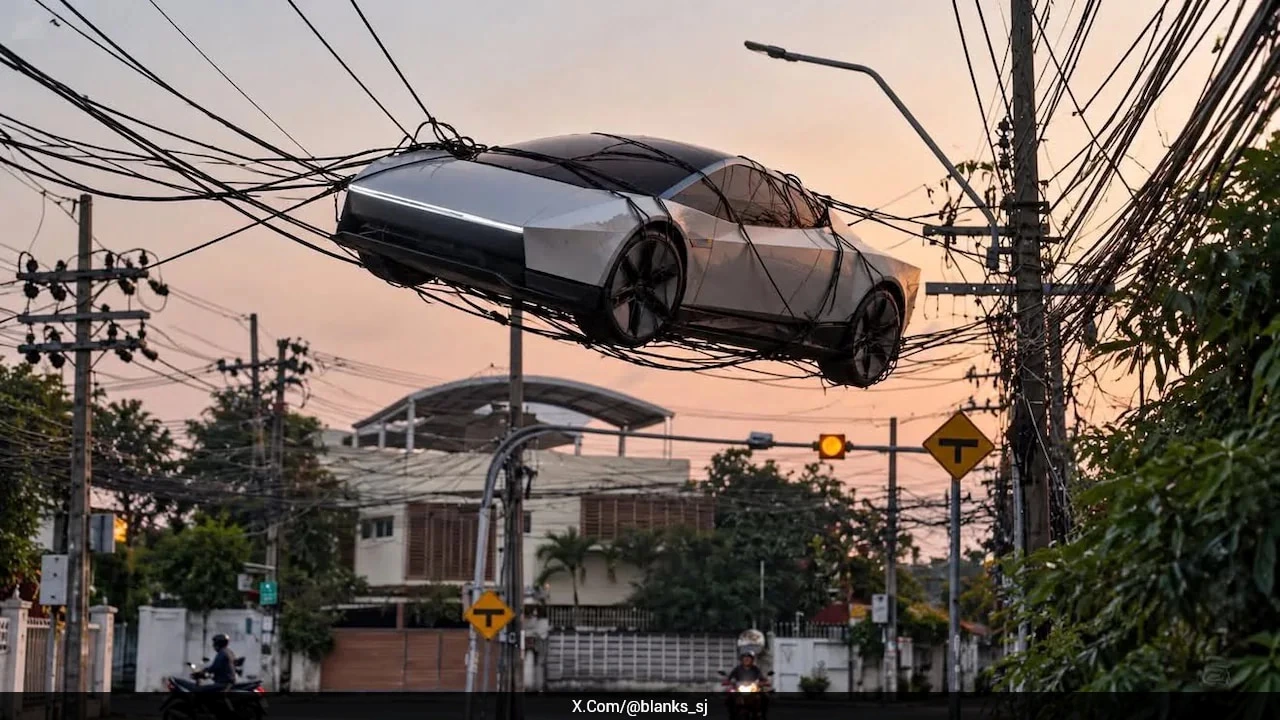
[Insert Image 2 Here: Satirical image of a flying Roadster caught in power lines]
Satirical concept image illustrating public doubts about whether a “flying car” would be practical in real urban environments. This is not an official Tesla photograph.
The Image Raises a Real Question
The image may be humorous, but the concern behind it is legitimate.
What happens when an airborne vehicle encounters power lines, buildings, pedestrians or unexpected mechanical problems? Roads already depend on traffic rules, safety barriers and established infrastructure. A vehicle capable of leaving the ground introduces an entirely new level of risk.
There is also a regulatory problem. Once a vehicle becomes airborne, it may no longer be treated only as a car. Aviation certification, approved operating areas, pilot requirements and local restrictions could all become relevant.
This means the greatest obstacle may not be making the Roadster fly. The harder challenge could be making it safe, legal, repeatable and commercially realistic.
The Engineering Achievement Is Still Real
Skepticism should not erase the technical value of the project.
Many important technologies began as expensive or impractical experiments. Engineering progress often starts by testing what is possible before finding the most useful commercial application.
The Roadster’s thrusters and suction system may eventually contribute to technologies that are more practical than flying cars, including faster emergency braking, improved vehicle stability, active aerodynamics and new control systems for high-performance electric vehicles.
The demonstration therefore matters even if the final product never becomes an everyday flying car.
Five Questions Tesla Still Needs to Answer
Before the new Roadster can be considered a commercial breakthrough, Tesla needs to provide clear answers:
-
When will customer production actually begin?
-
Which demonstrated features will be included in production vehicles?
-
What testing standards will apply to the thruster system?
-
In which countries or locations can the Rocket version legally operate?
-
Will customers receive a usable vehicle or an extremely limited engineering showcase?
Until those questions are answered, the Roadster remains caught between two identities: a serious technological achievement and a spectacular marketing statement.
What This Means for Product Development
The Roadster also demonstrates a broader truth about modern product development: breakthrough products rarely come from a single technology.
They require industrial design, mechanical engineering, electronics, embedded control, prototyping, testing and manufacturing to work together as one complete system. A bold concept only becomes a real product when every component can be produced, assembled and verified reliably.
At Tongyong Industries, we pay close attention to developments like this because they reflect the same challenge faced by many product developers: turning an ambitious idea into something that can actually be manufactured.
We support customized electronic product development, PCBA, enclosure manufacturing, prototyping and complete product assembly. Whether your idea is a practical consumer device or an unconventional concept, successful development begins with realistic engineering and dependable manufacturing.
Final Thought: Can It Fly, or Can It Only Perform?
Tesla has shown that the Roadster can perform remarkable airborne movements. What it has not yet demonstrated is whether those movements can become safe, legal and practical for real customers.
So perhaps the most accurate conclusion is this:
The Tesla Roadster may be able to fly—but proving that it should fly is an entirely different challenge.
What do you think? Is this the beginning of a new automotive era, or one of the most impressive publicity demonstrations ever created?
Learn more about customized electronic product development: